


Peer‑to‑peer payment apps like Zelle®, Venmo, PayPal®, and Cash App make sending money fast and convenient. Unfortunately, that same speed is exactly what scammers rely on. Once money is sent, it's often gone for good, which is why understanding common scams is your best defense.
Common P2P scams to watch for
-
Accidental deposit scams
A stranger sends money to your account and then urgently claims it was a mistake, asking you to send it back. The money they "sent" is usually stolen, and once the bank reverses the fraudulent transfer, the original funds disappear from your account. If you return the money, you end up sending your own real money to the scammer and absorbing the full loss.
-
Unauthorized transfers
Criminals trick you into giving up your login information through phishing emails or fake bank login pages, allowing them to access your account without permission. These scams often start with messages that look like they're from your bank or another trusted company. Once you enter your information, the scammer can log in and move money out of your account.
-
Seller fraud
Scammers advertise items like concert tickets, electronics, or clothing at attractive prices. Once you pay, the seller disappears and the product never arrives. Red flags include blurry or stolen product photos, newly created accounts, and sellers with no reviews or ratings.
-
Buyer or overpayment scams
Similar to accidental deposit scams, a fake buyer sends a check for more than the purchase price and asks you to return the difference. The check later bounces when the bank identifies it as fraudulent, leaving you responsible for the full amount.
How to stay protected
-
Only pay people you know and trust
Most P2P payments can't be reversed. Treat every transfer like handing over cash.
-
Slow down and verify
Scammers often create urgency by claiming your account is at risk or an offer is about to expire. Taking a moment to double‑check can prevent costly mistakes.
-
Double‑check payment details
Confirm usernames, phone numbers, and amounts before sending money. A single mistyped character can send funds to the wrong person.
-
Enable security alerts
Turn on notifications in Digital Banking so you're immediately aware of unusual activity.
-
Avoid suspicious links
Never click unexpected messages or allow remote access to your device. Legitimate financial institutions will not ask for this.
-
Protect your information
Use strong, unique passwords for each platform and avoid sharing personal details with anyone who contacts you unexpectedly.
-
Keep your device secure
Update your phone regularly, use biometric login when available, and avoid using public Wi‑Fi for financial transactions.
-
Use platforms with purchase protection
If you must use a P2P platform to buy goods or services, consider using PayPal® or Venmo's designated checkout options, which offer purchase protection and provide more security than standard P2P transfers.
A little caution goes a long way when using fast‑moving payment apps. Staying aware of common scams and practicing safe habits can help keep your money and your information protected.
Download our full infographic about how to protect yourself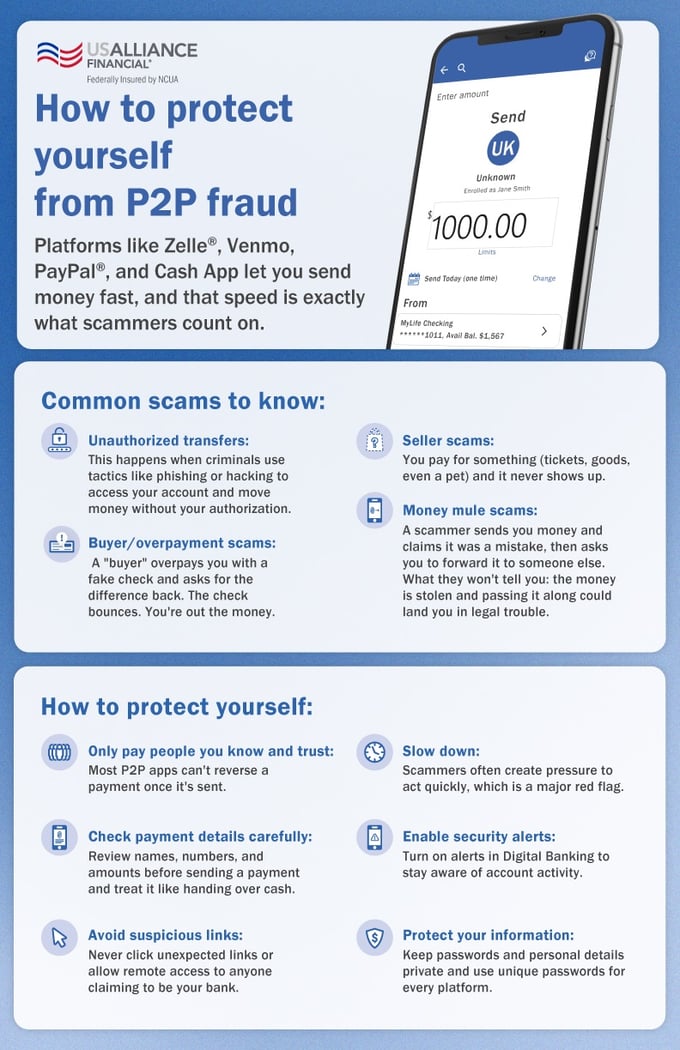




 NMLS #562301
Comments