



Graduation day is behind you, and the real world is calling. (Including your student loans.) On the bright side, you typically have six months before payments begin, giving you time to get prepared. Here's a simple breakdown of how repayment works.
You have more than one repayment option
When it comes to paying back your federal student loans, you're not locked into a single path. Understanding your repayment options can help you choose a plan that fits your income, goals, and lifestyle.
-
Standard repayment
You make fixed monthly payments and finish in about 10 years. This plan usually results in the lowest total interest cost, making it a good fit if you can comfortably afford the payments from the start.
-
Income‑driven repayment
Your payment adjusts each year based on what you earn, which can make it more manageable if your income is lower.
-
Graduated repayment
Payments start smaller and increase every two years, designed for people whose income is expected to grow over time.
Struggling to make payments? You've got options.
If you're having trouble keeping up with your student loan payments, you're not out of luck. There are built‑in protections designed to help you stay afloat.
-
Deferment and forbearance
These options can temporarily pause or reduce your payments while you get back on your feet.
-
Interest may still build
But it's far better than falling behind or missing payments.
-
Reach out to your loan servicer early
They often have more flexibility than people expect, especially if you contact them before things escalate.
Small moves that make a big difference
Even tiny adjustments to how you manage your student loans can save you money and reduce stress over time.
-
Turn on autopay
Enrolling in autopay can earn you a small interest rate reduction with most federal loan servicers. It's a simple "set it and forget it" move that helps you stay on track and avoid missed payments.
-
Update your repayment plan if needed
Your financial situation won't stay the same forever, and your repayment plan doesn't have to either. If your income goes up, down, or becomes more predictable, you can switch to a plan that better fits your needs. This flexibility can make repayment feel far more manageable.
Think you might qualify for forgiveness?
-
Public service, teaching, and nonprofit work
Public service workers, teachers, and nonprofit employees may have their remaining balance forgiven after 10 years of qualifying payments.
-
Check out Public Service Loan Forgiveness (PSLF)
It's real, it works for many people, and it's absolutely worth exploring.
Staying proactive now sets you up for smoother repayment later and puts you firmly in control of your financial future.
Download our full infographic about student loan repayment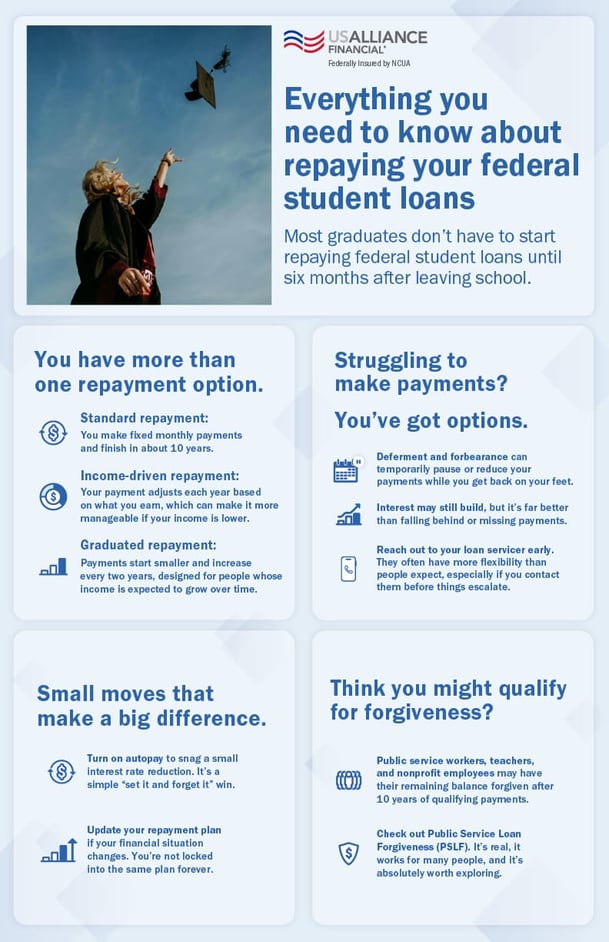




 NMLS #562301
Comments